When a Landscape Becomes a Character
Learn how to read landscape in northern film by tracing terrain, weather and distance to see how a setting changes choices, movement and tension.
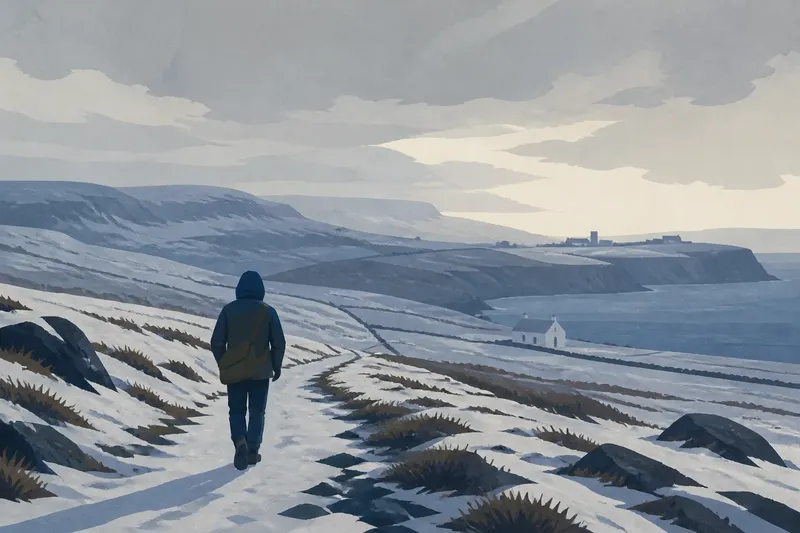
The common mistake when reading a northern film is to treat its landscape as a handsome backdrop: snow on the ridge, rain on the road, a grey sea beyond the windows. That shortcut costs you the story’s practical logic. Watch closely and the land can close a route, expose a secret, delay help or make a character’s smallest choice feel consequential.
To see when a landscape becomes a character, follow what it allows and prevents, in the order the film reveals it. You do not need specialist terminology or a pause button. Start with the frame, then track movement, weather, distance and consequence; each gives you a different clue about how the setting is shaping the film.
What does the first view let you know?
Begin with the first substantial view of the setting, rather than deciding what the scenery “means”. Ask what is visible, what is hidden and where a person could plausibly go. A wide shot of a northern coast, for instance, may show a settlement on one side and open water on the other, but conceal the path linking them.
Notice the edges of the frame. A ridge can block the far side of a valley; a treeline can hide a road; a harbour wall can divide characters who are close enough to see one another. The frame is not a map, but it tells you which options the film wants you to consider—and which remain uncertain.
Then look for repeated views. If the same hill, bridge or stretch of shoreline returns, compare what has changed: the light, the people crossing it, or the route now closed. A landscape starts to feel active when a familiar place offers different possibilities at different moments.
How does the terrain direct movement?
Follow each journey with your eye. Does a character walk along a road, climb a slope, cross a field or detour around a river? These choices can reveal the physical demands of the place before anyone explains them. A straight line on a map may become a long, awkward route on screen.
Pay attention to what bodies do. Someone who slows on loose gravel, leans into wind or keeps to a marked path is responding to conditions, not merely crossing scenery. The film may hold the shot long enough for that effort to become part of the character’s situation.
Sound can make the route feel different from what the image suggests. Footsteps swallowed by snow, gusts over dialogue or water masking a call can make a familiar journey feel exposed or uncertain. Ask whether the soundtrack helps a character communicate, or makes reaching another person harder.
Keep the setting’s limits distinct from a character’s decision. A person may choose not to cross a bridge, while the bridge itself remains passable; another may want to leave but have no visible route out. That distinction helps you avoid assigning every obstacle to the landscape when the film may be showing fear, loyalty or a deliberate refusal.
What changes when the weather turns?
Compare the weather across scenes instead of treating it as atmosphere. Rain can blur a view, fill a track or make a doorway a brief refuge. Snow may soften familiar boundaries, while a clear spell can expose how far a person is from shelter. The useful question is not simply whether the weather looks dramatic, but what it changes for someone in that scene.
Watch how characters adapt. Do they stop talking to listen, shelter beneath an overhang, change their pace or abandon an errand? A small adjustment can carry more story weight than a sweeping storm shot because it shows the weather entering the character’s choices.
Notice whether conditions create unequal options. A person with a vehicle, warm room or local knowledge may move through the same landscape differently from someone on foot or unfamiliar with the route. The film can use that gap to show dependence, authority or vulnerability without spelling it out.
How does distance become dramatic?
Distance is more than the space between two points. It can be the time needed to reach someone, the effort of staying in sight, or the uncertainty of whether anyone will hear a call. A film can make a nearby house feel remote by placing it across rough ground, beyond a river or behind a curtain of weather.
Listen for dialogue about travel, but check it against what the film shows. A character may describe a place as close, yet the journey takes several scenes; another may avoid naming how far away a destination is. The mismatch can reveal a character’s confidence, impatience or wish to keep someone waiting.
Editing also shapes perceived distance. A cut may skip the difficult stretch, or hold on a long walk until the destination seems uncertain. When the film leaves a gap between departure and arrival, ask whether that missing journey conceals information, makes travel feel routine or keeps the audience unsure of the route.
Which clues help you read landscape in northern film?
How can I tell whether scenery affects the plot?
Look for a visible change in what a character can do: a route blocked, a meeting delayed, a sightline opened or a sound carried away. If the next choice would be the same in a room with a painted backdrop, the setting may be chiefly decorative in that moment.
Does a wide shot always make a place feel isolated?
No. A wide frame can show roads, buildings or other people that connect a character to the community. Isolation comes from the relationship between the person and those possible connections, not from the size of the landscape alone.
How should I read weather that seems symbolic?
Start with its practical effect, then consider any emotional echo. If rain both interrupts a conversation and matches a character’s mood, the film is letting those functions overlap; you do not need to choose only one reading.
What if the landscape looks beautiful but nobody mentions it?
Silence does not mean the setting is irrelevant. Check whether the composition, sound or route quietly changes a choice; if nothing in the scene depends on it, the beauty may simply provide visual texture.
How can you test your reading against a scene?
Take one scene and make a simple note in three columns: what the place physically allows, what it prevents and what the character does in response. Use observable details—“the ridge hides the road” is more useful than “the ridge feels hostile”. Then check the next scene for a consequence, such as a changed plan or a delayed encounter.
Say you are watching an invented scene in which a courier sets out across a snow-covered moor to meet a neighbour. The film shows the track disappearing beneath fresh snow, then cuts to the courier turning towards a nearby shelter instead. You could note that the weather obscures the route, the original meeting becomes harder to reach, and the character chooses cover; the next scene would tell you whether that choice postpones the meeting or alters it altogether.
This method also helps distinguish a landscape’s influence from a convenient excuse. If the film establishes a condition and carries its consequence forward, the place has entered the chain of events. If it introduces a dramatic storm and then forgets it, that weather may be mood or spectacle rather than a force shaping the story.
What should you carry into the next scene?
Keep one question in mind: what can this character do here that they could not do somewhere else? The answer may be as modest as hearing a distant engine, finding shelter behind a wall or losing sight of a companion at a bend. Small constraints often reveal more than a speech about isolation.
As you keep reading landscape in northern film, follow the consequences rather than hunting for a fixed symbol. Terrain gives a journey its shape; weather changes its terms; distance determines who can meet, see or hear whom. When those details alter a character’s available choices, the setting is no longer scenery around the story—it is part of how the story moves.